
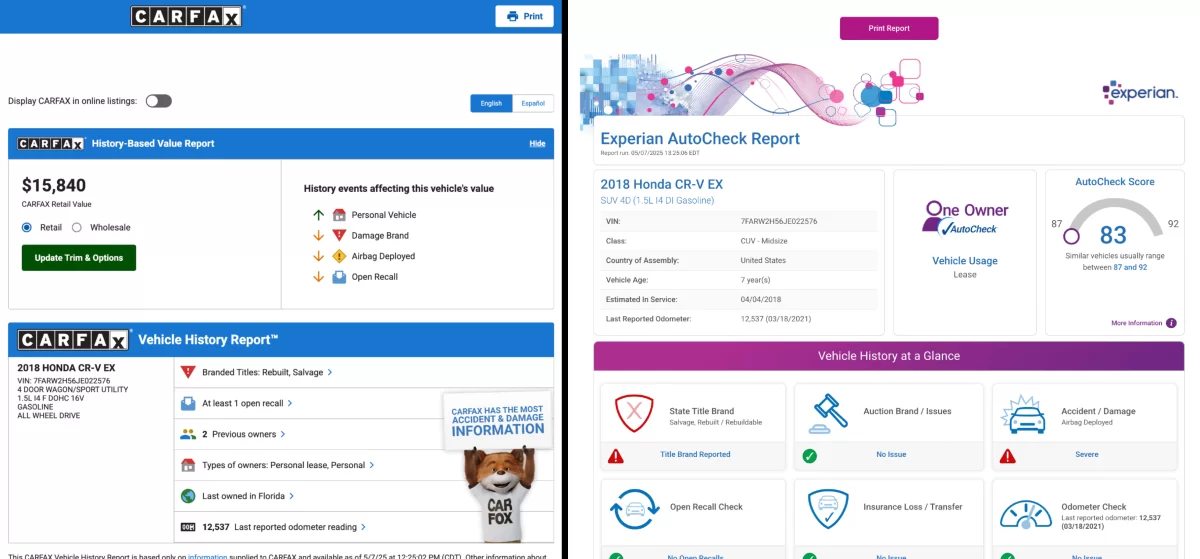
Both companies offer reliable and in-depth vehicle history reports. When buying a used car, knowing its history is the key. A vehicle history report can tell you about past accidents, ownership, title issues, Mileage, recall information, Service and maintenance details. AutoCheck and Carfax are the top names in these reports, but they’re not the same in different aspects. Carfax is popular with everyday buyers, while AutoCheck is great for checking out auction cars. Both give you solid info, but they differ in price and details. On Carfax, you can get the report by entering vin number. Let’s compare them to help you pick the best one for your next car purchase.
Features of Autocheck and Carfax
A. Types of information provided
- Accident history: Both services track any reported accidents. However, the depth of the data can vary.
- Title information: This includes details like title status (clean, salvage, rebuilt) which is crucial for buyers.
- Service records: A complete service history can tell how well the vehicle has been maintained.
- Reports presentation: The clarity of the reports varies; Carfax includes more graphics, while Autocheck focuses on textual information.
In-Depth Look at Autocheck
A. Data sources and accuracy
- Partnerships with insurance companies: Autocheck partners with numerous insurance firms to source accident data.
- Government databases and statewide agencies: They access state repositories for vital title information.
- Limitations on data coverage: One downside is that certain data may not be universally available, depending on the state.
B. Unique features of Autocheck
- Autocheck Score: A simple number that sums up a car’s history, making it easier for consumers to assess a car's overall condition at a glance.
- Exclusive reporting for auctions: AutoCheck provides special, detailed reports focused on cars sold at auctions.
- Vehicle history summary: Their reports feature a concise summary that quickly highlights key points.
C. Pros and cons of using Autocheck
- Advantages for consumers:
- Generally lower cost for single reports.
- Easy-to-understand summary scores.
- Disadvantages and areas of improvement:
- Sometimes less comprehensive than Carfax.
- Coverage may vary based on regional data availability.
- Ideal customers for Autocheck: Those looking for budget-friendly options without sacrificing critical data.
In-Depth Look at Carfax
A. Data sources and accuracy
- Extensive dealer and service partner networks: Carfax has a wide network of partnerships, which helps it collect a rich array of data.
- Public records and accident reports: Accesses a broad database for accident and title information.
- Coverage limitations: While they try to cover as much as possible, there might be gaps particularly in accident reports if they weren’t reported.
B. Unique features of Carfax
- Carfax Report History: This comprehensive report gives insights into every aspect of a vehicle’s history.
- Additional resources (e.g., recall alerts): Carfax goes a step further by alerting users about recalls that may affect the vehicles in question.
C. Pros and cons of using Carfax
- Strengths for potential buyers:
- Often seen as the more detailed option.
- Strong brand reputation, providing peace of mind.
- Weaknesses to consider:
- Higher costs for individual reports compared to Autocheck.
- Some users have reported instances of outdated or incorrect data.
- Ideal customers for Carfax: Buyers looking for extensive data and particularly detailed reports.
Choosing Between Autocheck and Carfax
A. Factors to consider when deciding
- Purpose of the report (buying or selling): Are you a buyer looking for peace of mind, or a seller aiming to increase buyer trust?
- Budget and financial considerations: Which service gives you the best value based on your report needs?
- The type of vehicle in question: Consider if you’re looking at newer or older cars, as different vehicles may benefit from different types of reports.
B. Situational considerations for usage
- First-time buyers vs. experienced users: Beginners may favor Carfax’s user-friendly design and reputation.
- Importance of a comprehensive report: If you need deep insights, Carfax might be the way to go.
- Regional considerations and availability: Some areas may have better data coverage with one provider over the other.
C. Testimonials and user experiences
- Success stories from Autocheck users: Many appreciate the affordability and the clear Autocheck Score.
- Feedback from Carfax users: Users value the detailed reports, and many have reported successful buys with a quick review.
- Comparison of overall satisfaction: Users across the board lean towards Carfax for detail and Autocheck for cost-effectiveness.
Conclusion
A. Summary of key differences and similarities
Autocheck and Carfax both offer valuable vehicle history reports but cater to different needs and preferences, from pricing to the depth of information offered.
B. Final thoughts on making an informed choice
Selecting between Autocheck and Carfax boils down to what you value most—a comprehensive report versus affordability.
FAQs
- Price difference between Autocheck and Carfax?
Autocheck offers a single report at a lower price, but Carfax is regarded as more costly. Both reports depend on detailed information.
- Can I trust the information provided by both services?
Yes, both services gather data from reliable sources; however, it’s always good to cross-reference significant details.
- How do I obtain a report from either provider?
You can easily purchase reports through the carvins.net, usually requiring just the Vehicle Identification Number (VIN).
- Which service is better for used car dealerships?
Many dealerships prefer Carfax due to its extensive data and some also find Autocheck reliable. Every dealer chooses depending on their customers and budget control.


