
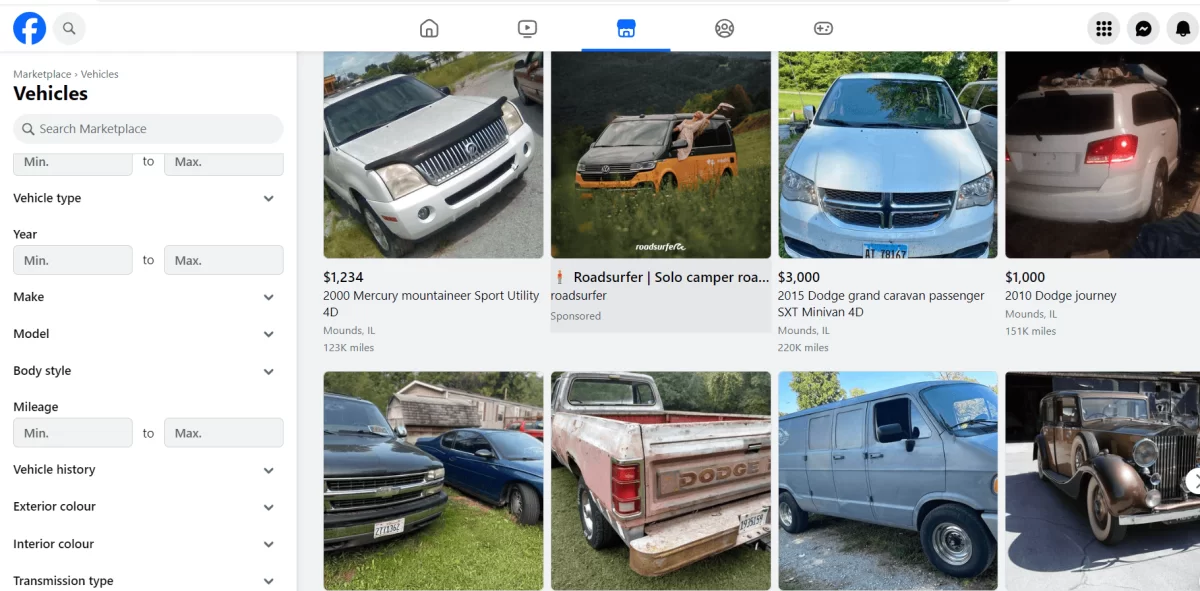
Hey folks, James here. Let's have a little chat. Buying a car on Facebook Marketplace can feel like the Wild West. It's a world of amazing deals and disastrous lemons, all mixed together. As a guy who's spent more time with grease on his hands than a fry cook, I can tell you that the difference between finding a gem and getting totally burned comes down to one thing: your homework. A pretty picture and a low price can hide a world of hurt, from a bent frame to a title that's got more brands on it than a prize-winning steer.
But I'm not here to scare you. I'm here to give you the mechanic's playbook. We're going to walk through the entire process, from spotting a scammer's ad a mile away to knowing exactly what to look for in a vehicle history report, and finally, how to handle the handshake and the paperwork without getting taken for a ride. So grab a coffee, and let's learn how to navigate the Marketplace like a pro. This is how you find a great car without losing your shirt.
Part 1: The Digital Detective - How to Vet a Facebook Ad Before You Even Leave the House
Your investigation starts the second you see an ad. Before you even think about messaging the seller, you need to put on your detective hat. Scammers and flippers leave clues all over their listings, and if you know what to look for, you can eliminate 90% of the bad deals from your couch.
Reading Between the Lines of the Ad
First, look at the photos. Are they clear? Are there pictures from all angles, including the interior and the engine bay? A seller who's proud of their car will show you everything. A seller who's hiding something will give you a few blurry, far-away shots. And here's a big one: are the license plates blurred out? While some private sellers do this for privacy, it's a massive red flag for car flippers who might be hiding bad registration tags or trying to prevent you from running the plate number for a free history check.
Next, read the description. Is it detailed, or is it just "Runs good, A/C cold"? A vague description is a lazy description, and lazy sellers are often lazy owners. Look for sob stories, too. Scammers love to create a sense of urgency with tales of a sudden military deployment, a divorce, or a death in the family. They want you to feel rushed so you don't look too closely.
Finally, check the seller's profile. Is it a brand-new account with no friends and a generic profile picture? That's a huge warning sign. A real person has a real Facebook history. Also, see what else they're selling. If they have five other cheap cars listed, you're not dealing with a private owner; you're dealing with an unlicensed dealer, or a "flipper," who likely bought the car at an auction, patched it up as cheaply as possible, and is now trying to dump it on you.
The First Contact: Getting the VIN is Non-Negotiable
Okay, the ad looks promising. You've decided to reach out. Your first and most important question is simple: "Can I please have the VIN?" The Vehicle Identification Number is the car's 17-digit fingerprint, and it's the key to unlocking its entire history. If the seller refuses to give you the VIN, the conversation is over. End it. Walk away. There is absolutely NO legitimate reason for a seller to hide the VIN. They are hiding something major, guaranteed.
Once you have the VIN, your next step is to head straight to a site like Carvins.net. This is where you make the single best investment in your car-buying journey. For a few bucks, you can get a cheap Carfax and AutoCheck report bundle. Do not skip this step. Trying to save $20 by not getting a vehicle history report (VHR) is like refusing to wear a parachute because you want to save on baggage fees. It's the definition of penny-wise and pound-foolish.
Part 2: The VHR Deep Dive - Why You Need BOTH a Carfax and an AutoCheck Report
Alright, you've got the VIN, and you're ready to do your homework. A lot of people think Carfax is all you need. They're wrong. Carfax and AutoCheck are like two different detectives interviewing the same witnesses. They both get the main story, but sometimes one of them picks up a crucial detail the other one missed. They pull from different sources, and getting both gives you the most complete picture of the car's past. Think of it this way: Carfax is the car's detailed medical chart, while AutoCheck is its financial credit score and background check.
Carfax vs. AutoCheck: The Mechanic's Breakdown
So, what's the difference? Carfax has a massive network of sources, including tons of repair shops. This makes it fantastic for seeing a car's service history. It's the report that tells you if the previous owner was diligent about oil changes, tire rotations, and other routine maintenance. It's how you find out if the car was loved or neglected.
AutoCheck, which is owned by the credit bureau Experian, has its own superpower: the patented AutoCheck Score. It also has deep connections to the auto auction world, so it can sometimes find records of auction sales—where many damaged cars end up—that Carfax might miss. Getting both reports from a place like Carvins.net is a cheap way to cross-reference the data and make sure no stone is left unturned.
Decoding the AutoCheck Score: What the Numbers REALLY Mean
Alright, let's talk about that AutoCheck score. This is some real insider knowledge that most buyers miss, and it can save you from making a HUGE mistake. When you see the score, you'll see two things: the score itself (a number from 1-100) and a "score range" for similar vehicles.
Here is the secret: The score itself is almost meaningless. The ONLY thing that matters is where that score falls within the recommended range.
Let me give you an example I saw on a report once. A 2016 Mercedes E-Class had an AutoCheck score of 82. Sounds pretty good, right? A solid B. But the recommended score range for similar E-Class sedans was 88-93. That score of 82 wasn't a B; it was a catastrophic F. It was way below the bottom of the range, signaling a major problem. And sure enough, digging into the details revealed the car had been in a massive wreck, declared a total loss, and given a salvage title. Without understanding the range, a buyer might have seen "82" and thought they were getting a deal.
The score is calculated based on a bunch of factors: the car's age, mileage, number of owners, any reported accidents, title brands (we'll get to those), and how it was used (like if it was a taxi or police car). It's not giving the car an absolute grade; it's giving it a relative grade. It's answering the question, "Is this specific 2018 Ford F-150's history better or worse than the average 2018 Ford F-150?" If it's below the range, something is seriously wrong. If it's within the range, it's average. If it's above the range, you might have found a real winner.
Part 3: Reading the Tea Leaves - A Deep Dive into VHR Red Flags
Okay, you've got your reports from Carvins.net in hand. Now you're the detective, and these documents are full of clues. You need to know what to look for. Here are the biggest, baddest red flags that should make you slam on the brakes.
Red Flag #1: Title Nightmares (Salvage, Rebuilt, Flood, and Lemon)
This is the most important section of the entire report. A car's title is its legal identity, and if it has a "brand" on it, that means it has a dark past. These brands are permanent scars. When you see one, you need to understand that you're not just buying a damaged car; you're accepting a massive amount of risk that a big insurance company or car manufacturer already decided wasn't worth it.
- Salvage Title: This is a car's official death certificate, written by an insurance company. It means the car was in a wreck, a flood, or some other disaster, and the cost to fix it was more than the car was worth. A car with a salvage title is legally just a pile of parts; you can't register it or drive it on the road.
- Rebuilt/Reconstructed Title: This is a zombie car. It was dead (salvage), but someone, usually a flipper, bought it cheap at an auction and stitched it back together just enough to pass a basic state inspection. While it's now legal to drive, that "Rebuilt" brand will be on its title FOREVER. Its value is slashed by up to 50%, most banks won't give you a loan for it, and many insurance companies will refuse to give you full coverage. You are buying a car that an insurance company, whose entire business is calculating risk, already declared a total loss.
- Flood Title: If you see this, run. Don't walk, RUN. Water is a cancer to cars. It gets into everything: the electronics, the wiring, the engine, the transmission. It causes rust to grow in hidden places inside the frame and under the carpet. Mold can grow deep in the seats and vents, which is a health hazard. These problems might not show up right away, but they will. Electrical gremlins will haunt you for the life of the car. If it was a saltwater flood, it's even worse—salt accelerates corrosion like you wouldn't believe.
- Lemon Title: This brand means the car was born bad. It had a major manufacturing defect that the dealer couldn't fix after multiple attempts while it was under warranty. The manufacturer was legally forced to buy the car back from the original owner. They then patch it up and sell it at auction with a "Lemon" brand on the title. You're buying a car that the people who built it couldn't even fix properly.
Unless you're a master mechanic looking for a complex project, avoid any car with a branded title. The cheap price tag is not a discount; it's a warning label.
Red Flag #2: A History of Violence (Decoding Accident Reports)
Most used cars have a ding or two. A minor fender-bender that was repaired properly isn't necessarily a deal-breaker. What you're looking for is evidence of a major CRUNCH. The reports will often give you clues about the severity. Look for these keywords:
- "Structural Damage" or "Frame Damage": This is the big one. The frame is the car's skeleton. If it's been bent or damaged, the car may never drive straight again, no matter how shiny the new paint is. It can cause uneven tire wear and unpredictable handling. This is a deal-breaker.
- "Airbag Deployment": Airbags don't go off in a parking lot tap. They deploy in a serious collision. If you see this on the report, you know the car was hit HARD. You need to be sure it was repaired by a competent shop, not just some guy in his backyard.
Now, here's the VHR's biggest weakness, and why it's only step one of your investigation: unreported accidents. If a guy wrecks his car, doesn't file an insurance claim, and pays his buddy cash to fix it in his garage, that accident will NEVER show up on a Carfax or AutoCheck report. The report can only tell you what's been reported. This is why a "clean" report doesn't mean a "perfect" car. It means the car has no reported major issues. It means the car has passed the first test and is now worthy of the next, more expensive step: a hands-on inspection by a real mechanic.
Red Flag #3: The Car's Relationship History (Owners and Usage)
A car's ownership history is like its relationship history. Some patterns are normal, and some are giant red flags. It's not just about the number of owners; it's about the velocity of ownership.
A ten-year-old car with three or four owners? That's pretty normal. People's lives change. But a two-year-old car with three owners? That's a car that's being passed around like a hot potato. It suggests that each owner discovered a serious, recurring problem and decided to dump the car on the next unsuspecting person rather than fix it. The shorter the time between owners, the more suspicious you should be.
On the flip side, a one-owner car is often a fantastic find. It usually means one person bought it, invested in it, and cared for it consistently. The history is simple and clear. Also, pay close attention to the type of use. A car that was a former rental or fleet vehicle might look like a good deal, and it probably had its oil changed on schedule. But think about how people treat rental cars. They're driven hard by hundreds of different people who have zero investment in their long-term health. That adds up to a lot of extra wear and tear. It's not an automatic "no," but it means the car needs an EXTRA thorough inspection.
Red Flag #4: Gaps in the Story (Service Records and Odometer Lies)
A good, detailed service history on a Carfax report is like a clean bill of health from a doctor. It shows the car was cared for. But you also need to look for what's NOT there. Big, multi-year gaps in the service records are a sign of neglect. It means the previous owner likely treated "change the oil" as a friendly suggestion, not a critical rule. That kind of neglect can lead to serious engine and transmission problems down the road.
And then there's the odometer. This is where a VHR really shines. The report tracks the car's mileage every time it's serviced, inspected, or has its title transferred. These entries create an incorruptible timeline. If you see the mileage go from 80,000 at a service in 2022 down to 60,000 at a title transfer in 2023, you've caught them red-handed. That's odometer fraud, it's a federal crime, and it's an attempt to artificially inflate the car's value by lying about its wear and tear. The VHR is your lie detector. If the seller's story ("I changed the oil every 3,000 miles!") doesn't match the VHR's timeline (a 30,000-mile gap in service records), you know you're dealing with a dishonest person. And if they'll lie about that, what else are they lying about?
Part 4: Boots on the Ground - The Final Steps to a Smart Purchase
You've done your homework. You've vetted the ad, you've gotten the VIN, and you've analyzed the Carfax and AutoCheck reports from Carvins.net. The car looks clean. Now it's time to leave the keyboard behind and see the car in the real world. But your most important tool isn't a wrench—it's your mechanic.
The VHR is Not a Crystal Ball: The Absolute Necessity of a PPI
I'm gonna say this as clearly as I can: A vehicle history report is NOT a substitute for a pre-purchase inspection (PPI) by a qualified, independent mechanic. The VHR is a screening tool. Its job is to help you eliminate the obvious lemons—the cars with salvage titles, odometer fraud, or major reported accidents—so you don't waste your time or money inspecting them.
A good mechanic will put the car up on a lift and see things a piece of paper never could. They'll check for:
- Hidden rust on the frame or floor pans.
- Leaking gaskets, hoses, or seals.
- The true condition of the brake pads and rotors.
- Signs of shoddy repair work, like mismatched paint or overspray.
- Worn-out suspension components.
- The health of the engine and transmission fluids.
A PPI will cost you between $100 and $200, but it can save you thousands. And here is the final, ultimate, non-negotiable red flag: If a seller refuses to let you take the car for a PPI, you thank them for their time and you WALK AWAY. Instantly. There is absolutely no legitimate reason for a seller to refuse an inspection, other than the fact that they are hiding something serious and they know a real mechanic will find it.
The Handshake: How to Transact Safely and Handle the Paperwork
The PPI came back clean, you've negotiated a fair price, and you're ready to buy the car. This is the moment when it's easy to get excited and drop your guard. Don't. The final steps are just as important for protecting yourself.
First, safety. Arrange to meet the seller in a safe, public place. The parking lot of your local police station is perfect. The lobby of your bank is also a great option. Never go to a seller's home or meet them in a secluded area, and always bring a friend or family member with you.
When it comes to payment, avoid carrying a huge wad of cash. Use a cashier's check from your bank or a bank transfer. This creates a secure paper trail. Scammers love untraceable payment methods like cash, and they especially love gift cards—if a seller ever asks you to pay with gift cards, it's a 100% guaranteed scam.
Finally, the paperwork. This is where you have to be meticulous. Look at the car's title. The name of the person selling you the car MUST match the name printed on the front of the title, and you need to see their government-issued ID to confirm it. If the names don't match, they cannot legally sell you the car. This is a common scam called "title jumping." Make sure the seller signs the title in the correct spot, and get a separate Bill of Sale that lists the date, price, VIN, and both of your names and signatures. Even if your state doesn't require one, it's your proof of purchase. And before you drive one inch, call your insurance company and add the car to your policy.
Here's a simple checklist you can save to your phone. Don't hand over a dime until every one of these boxes is checked.
Conclusion: Drive Smart, Not Scared
Look, I know this sounds like a lot. It can feel overwhelming. But buying a car on Facebook Marketplace doesn't have to be scary. It's a place where, if you're smart and prepared, you can find a vehicle you love for a price a dealership could never touch. The goal isn't to be paranoid; it's to be prepared. It's about swapping fear for knowledge and replacing a gut feeling with cold, hard facts.
Do your homework. Trust your gut. And get a professional opinion. By following this guide, you're not just buying a used car; you're making a smart, informed investment and protecting yourself from the folks out there who want to make a quick buck on your bad luck.
Look, folks. Before you even waste gas on a test drive, do the smartest thing you can do. Spend a few bucks to save yourself thousands in potential headaches. Head over to Carvins.net and grab the cheap Carfax and AutoCheck bundle. It's the cheapest and best insurance you'll ever buy for your next car. Tell 'em James sent you.


